
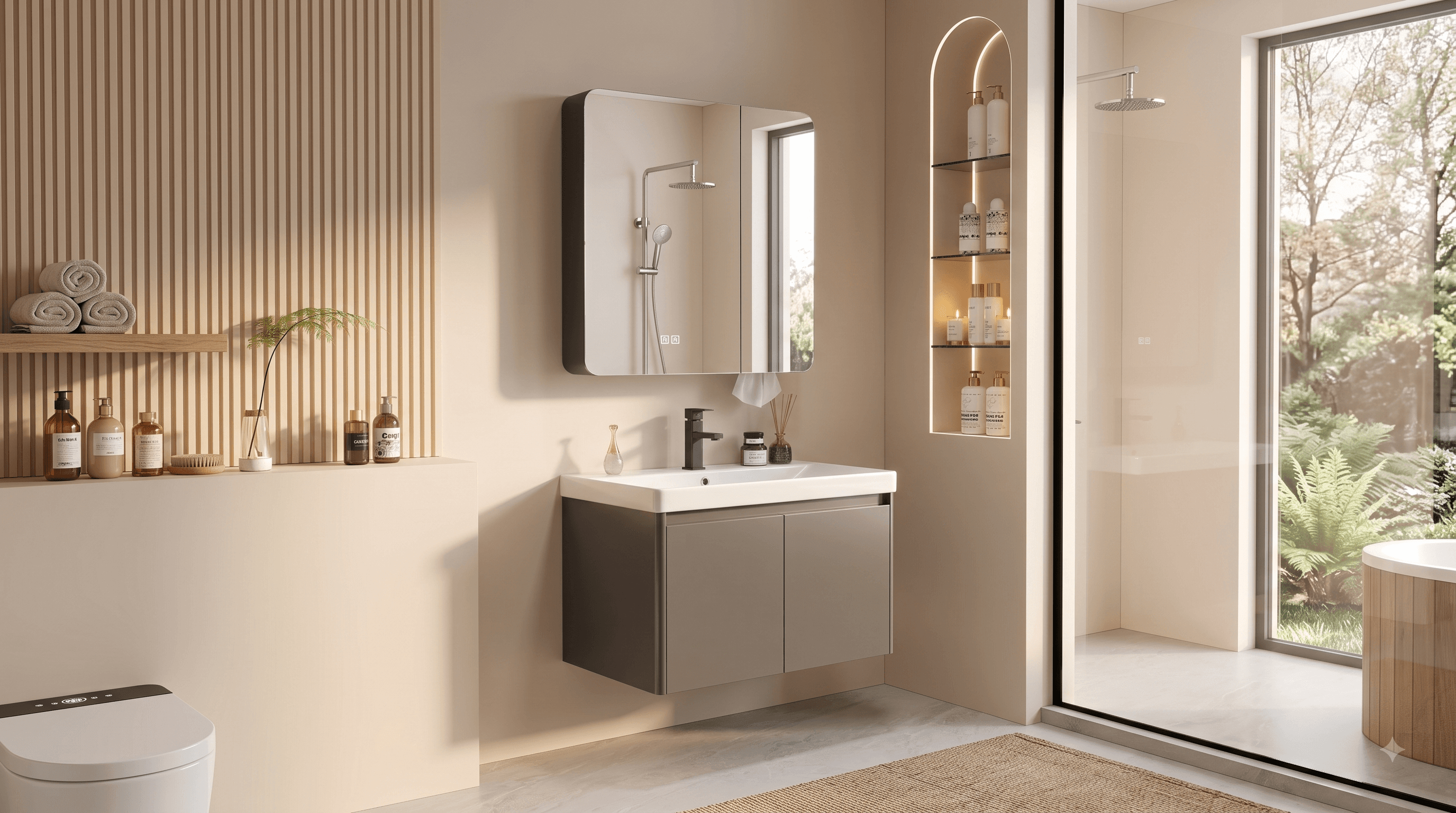
Walk into most HDB or condo bathrooms after a few years and you'll spot the same problem: a vanity cabinet with swollen doors, peeling laminate, or a musty smell that won't go away no matter how much you clean. It's not bad luck. It's Singapore's climate doing what it always does to the wrong material.
Average humidity here sits above 80% for most of the year, and bathrooms trap even more moisture from daily showers. Wood-based cabinets, even the moisture-resistant kind, are fighting a losing battle in that environment. This is exactly why more homeowners and renovation contractors are switching to aluminum bathroom vanities, a material built for exactly this kind of punishment.
This guide walks through what makes aluminum different, how it holds up in HDB bathrooms specifically, the finish options available, and how to keep it looking good for years.
What Makes Aluminum Different From Wood, PVC, and Stainless Steel
Most vanity buying guides in Singapore compare plywood, MDF, quartz, and sintered stone, but skip aluminum entirely, or mention it in a single line. That's a gap, because aluminum solves the exact problem those other materials struggle with: moisture.
Here's how the common vanity cabinet materials actually compare in a humid bathroom:

Aluminum — Moisture resistance: excellent, fully non-porous. Weight: light. Typical lifespan: 15–20+ years. Common issue: minimal, occasional scuffing on matte finishes.
Solid Plywood — Moisture resistance: good, if sealed properly. Weight: heavy. Typical lifespan: 8–12 years. Common issue: edges swell if the laminate seal is ever broken.
MDF / Particleboard — Moisture resistance: poor. Weight: heavy. Typical lifespan: 3–6 years. Common issue: swells and bloats once a scratch lets water in.
PVC — Moisture resistance: good. Weight: light. Typical lifespan: 6–10 years. Common issue: can warp under prolonged heat and yellows over time.
Stainless Steel — Moisture resistance: excellent. Weight: heavy. Typical lifespan: 15–20+ years. Common issue: higher cost, can show water spots without care.
Aluminum sits in the same durability league as stainless steel, but at a lighter weight and usually a friendlier price point, which is one reason it's shown up more often in wall-mounted vanity designs where the wall bracket needs to hold less load.
The other advantage is hygiene. Aluminum is completely non-porous, so there's no surface for mould or mildew to take hold on the way there is with wood grain or scratched laminate. A quick wipe-down is genuinely enough to keep it clean.
Why Singapore's Climate Makes Aluminum the Smart Choice
Singapore doesn't really have a dry season, and bathrooms are the most humid room in most flats. That's the core reason waterproof vanity materials matter more here than almost anywhere else.
A few things happen to the wrong cabinet material over time in this climate:
Swelling at the joints. Water works its way into any exposed edge, particleboard especially, and the board expands. Once it swells, it never goes back to its original shape.
Mould behind the cabinet. Poor ventilation combined with constant condensation gives mould a place to grow, especially in the back corners you rarely see.
Hardware corrosion. Hinges and drawer runners rust if they aren't rated for wet environments, which makes doors stick or sag within a couple of years.
An aluminum vanity sidesteps all three. The cabinet body itself cannot absorb water, so there's no swelling to worry about. It's also naturally corrosion-resistant, which matters more than people expect, since a rusted hinge is often what makes a vanity look old long before the cabinet itself does.
This is also why aluminum pairs well with the phrase waterproof vanity Singapore homeowners search for. It genuinely holds up to daily splashing, steam from hot showers, and the occasional flooded floor without needing a resealing every couple of years the way plywood does.
Aluminum Vanities for HDB Bathrooms

HDB bathrooms are compact, and every centimetre of clearance matters. Aluminum works well here for a practical reason beyond moisture resistance: it's light. A floating aluminum vanity puts far less strain on the wall bracket than an equivalent plywood or stone-top unit, which gives more flexibility with wall-hung designs in older flats where the walls may not take heavy loads.
Here's a general sizing guide for HDB bathrooms, based on common configurations:
HDB Common Bathroom (BTO or resale) — Recommended width: 500mm–700mm. Recommended depth: 400mm–480mm. Slim aluminum profiles suit older layouts with tighter corners.
HDB Master Bathroom — Recommended width: 700mm–900mm. Recommended depth: 450mm–500mm. More counter space without adding much visual bulk.
Condo Bathroom — Recommended width: 800mm–1000mm. Recommended depth: 450mm–550mm. Wall-hung aluminum designs read as more spacious in open layouts.
A wall-hung aluminum vanity also makes floor cleaning noticeably easier, since there's no cabinet base sitting directly on wet tiles collecting grime. In a typical HDB common bathroom that doubles as a shower room, that's a small detail that saves a lot of scrubbing over the years.
If you're renovating an HDB flat, note that a straightforward vanity swap generally does not require an HDB permit, as long as you're not relocating plumbing or hacking any walls. A permit becomes necessary once the renovation touches pipework or the waterproofing layer of the floor, so it's worth checking with your contractor before work begins.
Aluminum as Modern Bathroom Furniture

Beyond durability, aluminum has become a genuine style choice, not just a practical one. The clean, coated metal finish suits the minimalist look most Singapore homeowners are gravitating toward, and it pairs naturally with the handle-free, crisp-edged cabinetry trend showing up across modern bathroom furniture more broadly.
Aluminum vanities typically come in two coating finishes:
Gun metal (dark grey) reads as contemporary and pairs well with black tapware and dark tile grout, giving the bathroom a moody, grounded look.
Khaki (cream) softens the look for a warmer, more Scandinavian or Japandi bathroom style, and works well in brighter bathrooms.
Unlike laminate finishes on MDF, which can look slightly plasticky under bathroom lighting, the coated aluminum surface has a subtle texture and weight to it that reads as more premium in person, even at a comparable price point.
Caring for Your Aluminum Vanity in Singapore's Humidity

One of the advantages of aluminum is how little maintenance it actually needs, but a few habits help it stay looking new for longer:
Wipe down after use. A quick pass with a dry or microfibre cloth after your shower prevents water spots from settling on the surface.
Avoid abrasive cleaners. Stick to mild soap and water. Harsh scouring pads can dull a brushed or matte finish over time.
Check hinges and runners yearly. Even corrosion-resistant hardware benefits from an occasional wipe and a drop of silicone lubricant if drawers start to feel stiff.
Keep ventilation running. An exhaust fan or open window after showers reduces ambient humidity, which helps every material in the bathroom, aluminum included, last longer.
Wondering how aluminum stacks up against wood specifically? Read our full breakdown in Aluminum vs Wood Vanity: Which Lasts Longer in Humid Bathrooms, including a year-by-year lifespan comparison and real cost-over-time numbers.
Frequently Asked Questions
Is aluminum good for a bathroom vanity? Yes. Aluminum is non-porous, corrosion-resistant, and unaffected by humidity, which makes it one of the most durable materials available for bathroom cabinetry in Singapore's climate.
What is the best waterproof material for a bathroom cabinet? Aluminum and stainless steel are the two most waterproof options for the cabinet body itself. For countertops, ceramic basin and quartz offer similar water resistance.
Is aluminum better than wood for a bathroom vanity? For humid climates like Singapore, yes. Wood-based cabinets, even sealed plywood, are more prone to swelling and mould over time compared to aluminum, which does not absorb moisture at all.
Do I need an HDB permit to install a new bathroom vanity? Generally no, if you are only replacing the vanity without moving plumbing or altering waterproofing. A permit is needed if the work involves relocating pipes or affects the floor's waterproof membrane.
How long does an aluminum bathroom vanity last? With basic care, an aluminum vanity typically lasts 15 to 20 years or more, since the material itself does not degrade from moisture exposure the way wood-based materials do.
Looking for an aluminum vanity that's built for Singapore homes? The Vanity Y-40 from LAS VELA pairs a streamlined aluminum cabinet with a ceramic basin and matching mirror, designed for exactly the kind of compact, humid bathrooms found across HDB flats and condos here. Explore the full vanity and bathroom collection, or visit our showroom on Jalan Kilang Barat to see the finishes in person. Planning a full renovation? Check out our BTO Renovation Package for bundled bathroom and furniture solutions.